

Ultra-thin lens for close-range imaging
SLP (SELFOC® LENS PLATE)
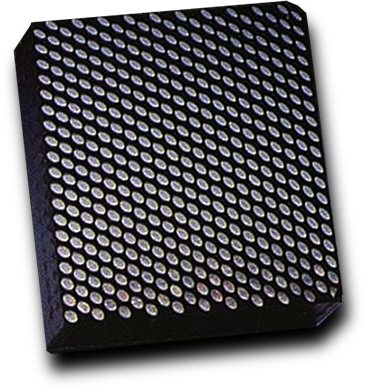
What is SLP
(SELFOC® Lens Plate)?
(SELFOC® Lens Plate)?
SLP applies the technology of the SLA (SELFOC® Lens Array) and
arranges the lenses in two dimensions, enabling the capture of
planar images rather than line images. A key feature of the SLP
is its ability to acquire images at close range, and because the
SLP itself is thin, it enables the design of compact optical
systems.
In addition, the SLP can capture high-resolution images while
maintaining a gap between the object and the sensor.
Furthermore, although the SLP is thin, it is rigid and
self-supporting, making it easy to integrate and secure within
devices.
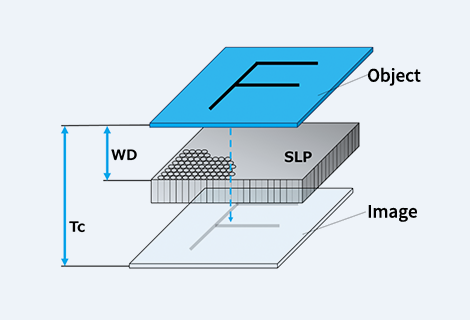
A compact optical system for close-range imaging
SLP forms an erect 1:1 image that makes large or complicated optics unnecessary. The WD is extremely short and allows you to capture images at ultra close-range.
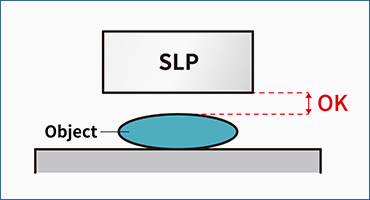
The SLP does not need to be in direct contact with the object or the sensor
High-resolution imaging is possible even with a gap between the object or sensor and the SLP.
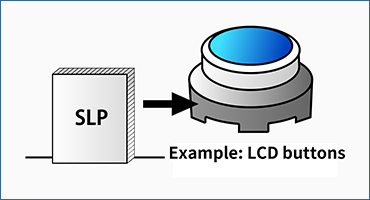
Easy to integrate and mount
Although thin, it is rigid and self-supporting, making integration and mounting easy.
Specifications
| Item | Specifications |
|---|---|
| Resolution | From approximately 20 µm and above |
| WD | Several hundred µm to about 30 mm |
| TC* |
Approximately 3 to 60 mm (consultation required for lengths under 8 mm) |
| Lens thickness | Approximately 0.6 to 40 mm |
| Size | Up to approximately 300 mm × 300 mm |
*TC = lens thickness + 2 × WD
Since the SLP is a product under development, its specifications
are subject to change.
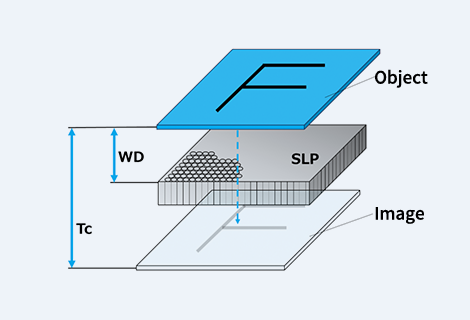
Regarding the SLP
Advantages
A compact optical system for close-range imaging
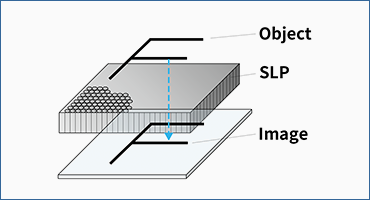
No direct contact is required
between the object or sensor
and the SLP
Easy to integrate and mount
Principle
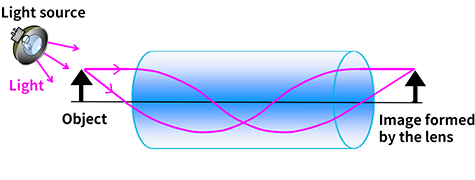
By properly designing and controlling the refractive index distribution, it is possible to generate an erect, 1:1 real image that forms at the same size and in the same orientation as the object.
The SLP achieves this functionality by arranging GRIN lenses in a two-dimensional planar array, enabling the projection of the target object as an erect, 1:1 image onto an image sensor or screen.
Application examples
01
Biometric authentication
(e.g.vein authentication, fingerprint authentication)

Applications include vein and fingerprint authentication.
In
vein authentication, hemoglobin in the veins absorbs infrared
light. When infrared light is directed onto the hand or fingers,
the vein pattern is captured as an image and compared with the
registered data.
In fingerprint authentication, the patterns of ridges and
valleys on the fingertip are optically scanned and matched
against the registered information.
Benefits of adopting the SLP
- Enables thinner, smaller and more portable devices
- Improves layout flexibility within the device
- Achieves high-resolution imaging of veins and fingerprints
- No direct contact required between the finger or sensor and the SLP
02
Chemiluminescence imaging system
(Western blotting)
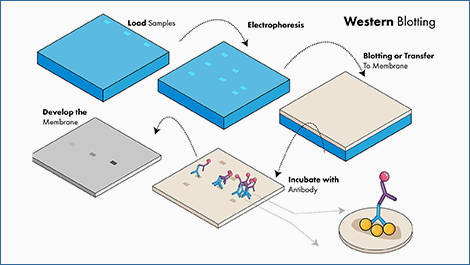
A chemiluminescence imaging system captures the faint light
generated by chemiluminescence using a high-sensitivity camera
and records it as an image.
The SLP can be utilized when detecting chemiluminescence or
color development based on the enzymatic activity of the target
protein.
Benefits of adopting the SLP
- Enables thinner and smaller devices
- Compact, yet does not require contact with the object
- Easy to integrate and mount within the device
- Allows one-shot image capture without scanning
03 Medical inspection device

The SLP is well suited for observing cells and similar
specimens.
The SLP into inspection devices enables
high-resolution observation without increasing the size of the
equipment.
Benefits of adopting the SLP
- Thinner and smaller devices
- Compact design without requiring contact with the object
- Easy to integrate and mount within the device
- Allows one-shot image capture without scanning
04 LCD button

An LCD button is an interface that combines a push-button switch or a rocker switch with an LCD or OLED display.
Benefits of adopting the SLP
- Thinner and smaller switches
- Provides high-resolution image display
- Allows images to be projected onto the surface of the LCD button